

By: Ishaq Mohammadi
In the heart of Quetta, Balochistan — surrounded by rugged mountains and a community built on tradition, resilience, and pride — stands a beacon of excellence: the remarkable Hazara Football Club (HFC). Established in 1937, it was the first non-tribal, volunteer-based organization created by the Hazara people, breaking through deeply entrenched tribal structures and setting the stage for a new era of collective identity and community development.
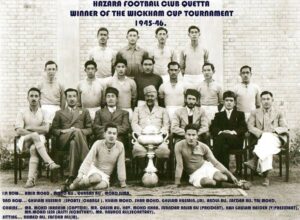
At a time when the Hazara community’s structure revolved around traditional units like the Khanwada (family), tribe, and ethnic lineage, five visionary pioneers — the late Babu Qasim Ali, the late Haji Nasir Ali Khan, along with Haji Ghulam Haider, Muhammad Issa, and Nowruz Ali Babul — laid the foundation of Hazara Football Club. This was more than the beginning of a sports team; it was the birth of a platform for Hazara youth to dream, to compete, and to excel beyond traditional boundaries.
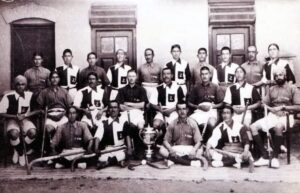
The Hazaras had long held a passion for sports, as evidenced by their proud involvement in the 106 Hazara Pioneers, a regiment formed in 1904 that was renowned for its excellence in rifle shooting and hockey. The Hazara Pioneers won the Western Command Championship in 1926 and were widely respected across the Indian subcontinent by British Army Brigadier Thomas Bunbury. But when the regiment was disbanded in 1933due to political shifts, it left a void — one that football would soon fill.
As football surged in popularity across British Balochistan, especially in Quetta, Hazara youth embraced the sport with determination and discipline. Drawing from their military heritage and athletic talent, Hazara Football Club quickly rose in stature. By the 1940s, the club was counted among the most formidable teams in the Indian subcontinent, clinching prestigious titles such as:
- All-India Wickham Cup (1945)
- All-India Quaid-e-Azam Tournament (1946)
The latter tournament’s final was attended by none other than Quaid-e-Azam Muhammad Ali Jinnah as Chief Guest — a moment etched in the collective memory of the Hazara community.

“The Hazara team from Quetta played with remarkable discipline and finesse — qualities that rivalled the best of the British Indian regiments. Their unity and tactical brilliance were unmistakable.”
After the birth of Pakistan in 1947, Hazara Football Club not only endured but flourished. Visionary leaders like Sardar Muhammad Isa Khan, Sardar Muhammad Ishaq Khan (late), Haji Muhammad Juma, Haji Muhammad Hussain, and the legendary Captain Qayyum Changezi first and then carried the torch forward. Captain Ahmed Ali’s legacy as a coach is unmatched — under his guidance, more than 30 Hazara players rose to international status, proudly representing Balochistan and Pakistan on global fields.
Among the club’s most celebrated alumni are:
- Captain Qayyum Ali Changezi, known as the Asian Pelé, captained and later coached the Pakistan National Football Team. His name today graces the Qayyum Papa Stadium in Quetta.
- Captain Safdar Ali Babul, a dual-sport legend who uniquely captained both the Pakistan Football and Hockey Teams — an unprecedented feat in Pakistan’s sports history. The Safdar Babul Hockey Ground in Gulistan Town stands in tribute to his enduring influence.
Beyond medals and trophies, what truly sets Hazara Football Club apart is its unwavering spirit of volunteerism. For over eight decades, HFC has:
- Operated entirely without compensation
- Trained and mentored thousands of youths, transforming them into disciplined citizens and athletes
- Provided dozens of players to national and provincial teams
- Fostered hope, resilience, and unity in a community often marginalized
As stated on the Hazara Football Club‘s official Facebook page:
“We are not just a team — we are a family built on sacrifice, passion, and the belief that sports can change lives.”
Today, under the guidance of committed leaders like Captain Zakir Hussain International, the legacy continues. He follows in the footsteps of his predecessors, ensuring that the values of discipline, teamwork, and excellence remain central to HFC’s ethos.
One of the club’s greats, Captain Sadiq Ali, a revered goalkeeper and former captain, once said:
“Wearing the Hazara Football Club jersey meant more than playing a game — it meant carrying the dreams of a whole community on your shoulders. Every dive, every save, every win was for our people.”
The reputation of Hazara Football Club is unparalleled across Pakistan. Its disciplined conduct and competitive spirit are considered assets to any tournament. Often, the presence of HFC is seen as a guarantee of a tournament’s success, both in terms of quality and crowd engagement.
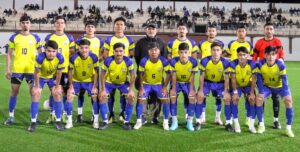
Hazara Football Club’s historical significance includes:
- Being the first non-traditional Hazara organization, founded in 1937, that continues to thrive today.
- Winning championships in British India, United Pakistan, and contemporary Pakistan.
- Operating on a purely voluntary basis — no salaries, just commitment.
- Nurturing thousands of players and shaping the Hazara identity through sport.
From its humble beginnings to becoming a national symbol of Hazara pride, Hazara Football Club is more than just a sports institution — it is a cultural legacy, a bastion of hope, and a shining example of what a dedicated community can achieve against the odds.
In every kick of the ball, in every roar of the crowd, and in every banner raised, the spirit of Hazara Football Club lives on — a timeless tribute to resilience, unity, and excellence in Pakistan’s rich sporting heritage.
